
Series Overview
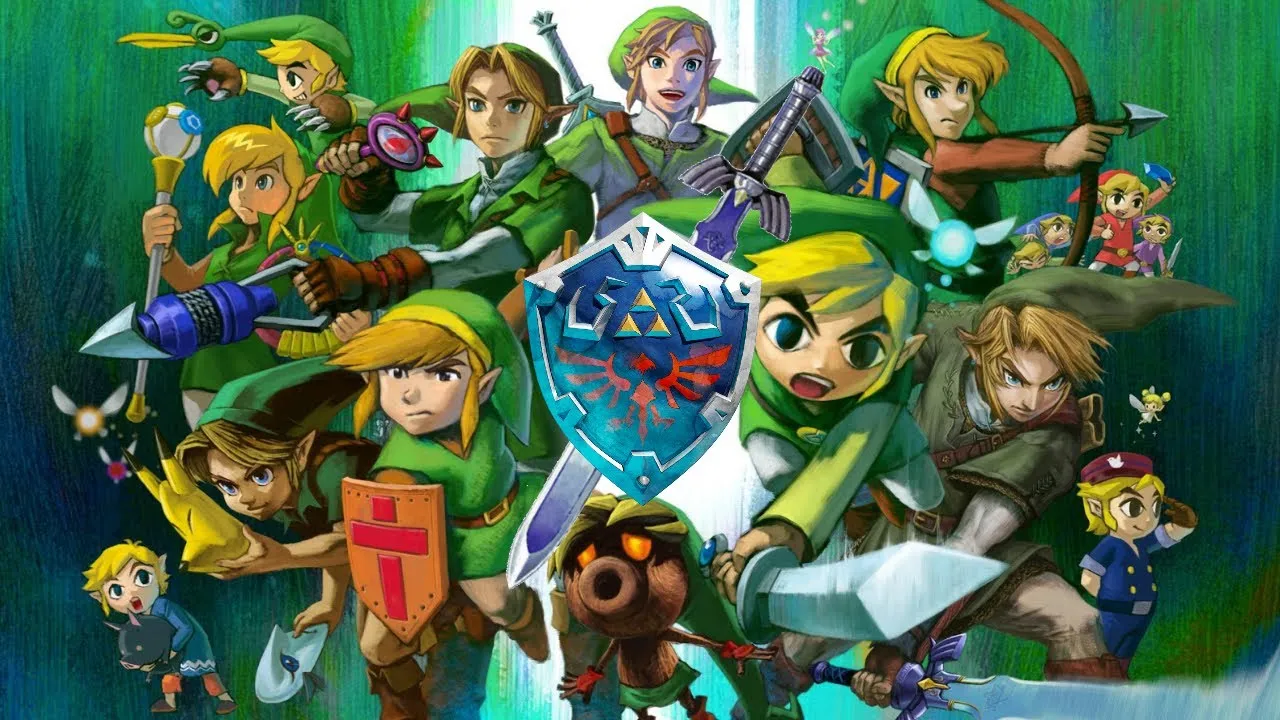
The Legend of Zelda is a foundational action-adventure game series developed and published by Nintendo. The series began in 1986 with The Legend of Zelda, and is available on NES, SNES, N64, GameCube, Wii, DS, 3DS, and Switch. Spanning decades of gaming history, the franchise has become synonymous with the Hero's Journey, establishing a high-fantasy framework that blends mythic storytelling with intricate environmental puzzles and a legendary sense of discovery.
Release Order Complete list of games series in Release Order.
| # | Game Title | Year | Platforms | |
|---|---|---|---|---|
| 1 | The Legend of Zelda | 1986 | Switch | |
| 2 | Zelda II: The Adventure of Link | 1987 | Switch | |
| 3 | The Legend of Zelda: A Link to the Past | 1991 | Switch | |
| 4 | The Legend of Zelda: Link's Awakening | 1993 | Switch | |
| 5 | The Legend of Zelda: Ocarina of Time | 1998 | 3DS | |
| 6 | The Legend of Zelda: Majora's Mask | 2000 | 3DS | |
| 7 | The Legend of Zelda: Oracle of Ages | 2001 | 3DS | |
| 8 | The Legend of Zelda: Oracle of Seasons | 2001 | 3DS | |
| 9 | The Legend of Zelda: The Wind Waker | 2002 | Wii U | |
| 10 | The Legend of Zelda: The Minish Cap | 2004 | Wii U | |
| 11 | The Legend of Zelda: Twilight Princess | 2006 | Wii, Wii U | |
| 12 | The Legend of Zelda: Phantom Hourglass | 2007 | Nintendo DS | |
| 13 | The Legend of Zelda: Spirit Tracks | 2009 | Nintendo DS | |
| 14 | The Legend of Zelda: Skyward Sword | 2011 | Wii, Switch | |
| 15 | The Legend of Zelda: A Link Between Worlds | 2013 | 3DS | |
| 16 | The Legend of Zelda: Breath of the Wild | 2017 | Wii U, Switch | |
| 17 | The Legend of Zelda: Tears of the Kingdom | 2023 | Switch | |
| 18 | The Legend of Zelda: Echoes of Wisdom | 2024 | Switch |
Chronological Order Complete list of games series in Chronological Order.
All Zelda Series Overview Each game's plot guide includes minor spoilers.
1. The Legend of Zelda: Skyward Sword (2011)
In the floating sanctuary of Skyloft, a young knight-in-training named Link prepares for a ceremonial flight, unaware that his destiny is tied to a world beneath the clouds. When a sudden tornado pulls his childhood friend Zelda down to the long-forgotten "Surface," Link is guided by a mysterious spirit inhabiting a sacred blade. He plunges through the cloud barrier to find a wilderness overrun by monsters and overseen by a flamboyant, sinister demon lord named Ghirahim.
Link must navigate ancient temples and scorching deserts to empower his sword and track Zelda's trail through the untamed wilds. As he uncovers the truth of the Surface's history, he learns that Zelda is not merely a captive, but a pivotal figure in a divine plan to seal a primordial evil. The friction between his simple life in the sky and the brutal requirements of being a hero begins to sharpen his resolve. Ghirahim's ritualistic pursuit of Zelda intensifies, revealing a hunger for a power that predates the kingdom of Hyrule itself.
The relationship between the goddess-reborn and her chosen protector becomes the emotional foundation for the entire series' mythology. Link faces the weight of a duty that spans eons, realizing that his actions will forge a weapon capable of altering the fabric of time. The suspense builds as he prepares to confront the source of all malice, knowing that the peace of the sky depends on the blood shed on the ground. He stands at the threshold of a final gate, wondering if the bond they shared in Skyloft can survive the transition into legend.
2. The Legend of Zelda: The Minish Cap (2004)
During a festival celebrating a legendary victory over darkness, a mysterious sorcerer named Vaati shatters a sacred blade and petrifies Princess Zelda. Link, a blacksmith's apprentice, is tasked by the King to seek the help of the Picori-tiny, hidden beings that only children can see. While venturing into the forest, he rescues a sentient, bird-like hat named Ezlo, who grants him the ability to shrink to the size of an insect. This new perspective reveals a hidden world thriving in the cracks and tall grass of the kingdom.
The quest involves reforging the broken blade into the White Sword by seeking out four elemental sanctuaries hidden across the land. As Link oscillates between his normal height and his Minish form, he discovers that Vaati is searching for the "Light Force," an infinite power hidden within the royal line. The sorcerer's influence corrupts the castle, turning the seat of power into a dark fortress of traps and illusions. Ezlo's own tragic connection to Vaati's past adds a layer of personal regret to their frantic journey.
Link must outmaneuver a villain who has already attained near-godhood while remaining small enough to navigate the treacherous micro-world. The thematic tension centers on the idea that the smallest creatures can carry the heaviest burdens of a nation. As the ritual to drain the Light Force nears its completion, Link finds himself caught in a race against time to restore the blade. He enters the final chambers of the castle, facing the reality that saving the Princess may require a sacrifice that severs Ezlo's world from his own forever.
3. The Legend of Zelda: Ocarina of Time (1998)
In the depths of the Kokiri Forest, a boy without a fairy is summoned by the Great Deku Tree to combat a spreading rot. Link is thrust into a sprawling kingdom to meet Princess Zelda, who fears that a desert king named Ganondorf is plotting to steal the Triforce. Using a magical ocarina, Link opens the door to the Sacred Realm, but his youth prevents him from wielding the Master Sword, trapping his spirit for seven years. He awakens to find Hyrule transformed into a desolate wasteland under the thumb of a dark tyrant.
The adult Link must travel between the two eras to awaken seven Sages who can seal the Great King of Evil. He navigates the echoes of his childhood, seeing how his absence allowed the world to wither and his friends to grow cold with despair. A mysterious figure named Sheik aids him from the shadows, providing cryptic guidance and teaching him the melodies of the past. The friction of time travel highlights the loss of Link's childhood, as he fights to reclaim a world that no longer recognizes him.
The relationship between the hero and the princess is defined by a shared destiny that they were both too young to fully understand. As Link gathers the strength of the Sages, he prepares for a final ascent into Ganon's Tower, a monolith of malice rising above the ruins of the market. The thematic weight of the narrative rests on the tragic necessity of growing up too fast to save a dying world. Link stands before the final door, his hand on the hilt of the blade, knowing that victory might mean losing the life he once knew.
4. The Legend of Zelda: Majora's Mask (2000)
Searching for a lost friend after the events of his previous quest, Link is ambushed in a dark forest by a masked imp known as Skull Kid. He is dragged into the parallel world of Termina, where a terrifying moon with a leering face is destined to crash into the earth in just three days. Cursed into a wooden form and stripped of his horse, Link must use the Ocarina of Time to relive these final seventy-two hours repeatedly. He navigates a society gripped by varying stages of denial, panic, and existential grief.
To prevent the apocalypse, Link must awaken four giants dormant in the corners of the world by assuming the identities of fallen heroes through magical masks. Each mask carries the memories and regrets of the dead, forcing Link to bear the emotional weight of a Zora guitarist, a Goron warrior, and a Deku scout. The conflict is intensely personal, as he helps the citizens of Clock Town find peace in their final moments, only to reset the world and render their relief moot. The ticking clock creates a pervasive sense of dread that no other entry can match.
The relationship between Link and the lonely Skull Kid explores the themes of abandonment and the corrupting nature of isolation. As the moon looms larger with every cycle, the dark influence of Majora's Mask is revealed to be far more sinister than a simple prank. Link is caught in a loop of suffering, trying to be a savior in a world that forgets his kindness every time the dawn rises. He prepares for the final carnival under a blood-red sky, wondering if there is any salvation for a land so thoroughly haunted by its own shadows.
5. The Legend of Zelda: Twilight Princess (2006)
Link, a simple farmhand in the peaceful Ordon Province, sees his world shattered when shadow beasts kidnap the village children and a wall of Twilight engulfs the land. Pulled into the darkness, he is transformed into a blue-eyed wolf and imprisoned by the servants of a usurper king named Zant. He is rescued by Midna, a mischievous and cynical creature from the Twilight Realm who seeks to use Link's power for her own agenda. Together, they embark on a quest to restore the Light Spirits and reclaim the shards of a fractured dark power.
The story follows their journey across a somber, realistic Hyrule where the inhabitants are unaware they have become lingering spirits in the Twilight. Link must shift between his human and lupine forms to purge the corruption, eventually uncovering Zant's plan to merge the two worlds into a realm of perpetual dusk. Midna's gradual shift from a selfish manipulator to a compassionate leader provides the narrative's emotional core. They discover that a much older, more malevolent force is pulling Zant's strings from the heart of Hyrule Castle.
The thematic tension explores the duality of light and shadow, and the heavy price of leadership in both realms. Link faces the reality that he is a descendant of a legendary lineage, fighting to live up to the ghost of a hero who came before. As they assemble the Mirror of Twilight, the bond between the wolf and the imp becomes the only hope for a fractured world. The suspense builds as they storm the castle to confront the true king of shadows, knowing that the gateway between their worlds may have to be closed forever.
6. The Legend of Zelda: Four Swords Adventures (2004)
During a time of uneasy peace, a dark shadow of Link appears and kidnaps Princess Zelda, luring the hero to the sanctuary of the Four Sword. Link draws the blade, which magically splits him into four distinct versions of himself, but the act also releases the ancient wind mage Vaati from his seal. The four heroes must work in tandem to navigate a kingdom gripped by chaotic storms and a strange, dark reflection of its own geography. They soon realize that their shadow-counterpart is leading them into a trap that spans across all of Hyrule.
The conflict escalates as the Links discover that Vaati is merely a pawn for a greater darkness that has stolen a powerful trident from a desert temple. They must travel through various regions, from the frozen peaks to the burning fields, collecting Force Gems to restore the power of their blade. The narrative highlights the friction and necessity of cooperation among the four aspects of the hero's personality. As they uncover the truth of the "Dark Mirror," they realize that the shadow-world is encroaching on their own, threatening to swallow the light entirely.
The thematic focus is on the strength found in unity and the danger of internal division. The heroes find themselves fighting not just monsters, but the deceptive illusions of their own shadows. As they approach the Tower of Winds, the true architect of the chaos reveals a plan to create a kingdom of eternal darkness. The suspense peaks as the four Links prepare for a final battle to save the princess and seal the ancient evil. They stand before the final gate, wondering if they can remain whole enough to finish the job before the blade's magic fades.
7. The Legend of Zelda: The Wind Waker (2002)
Generations after the Great Flood submerged the ancient kingdom of Hyrule, a young boy on Outset Island sees his sister kidnapped by a massive bird. Link sets out across the vast Great Sea with a band of pirates led by the spirited Tetra to rescue her, eventually discovering a world of scattered islands and forgotten legends. Guided by a talking boat known as the King of Red Lions, Link learns that an ancient evil has returned to hunt for the descendants of the royal line. He must use the Wind Waker, a magical conductor's baton, to master the currents and find the lost power of the gods.
The search for his sister leads Link to a much deeper conflict involving the sunken ruins of a world he never knew existed. He discovers that beneath the waves lies the frozen Hyrule, held in a stasis that is beginning to crack under Ganondorf's resurgence. Link must restore the power to the Master Sword by visiting ancient sages, even as Ganondorf's agents hunt Tetra for the secret she unknowingly carries. The vast, blue horizon serves as a backdrop to a story about moving on from the past while honoring its legacy.
The relationship between the young hero and the pirate queen evolves as they uncover their true identities in the depths of the ocean. The thematic tension centers on the choice between clinging to a dead kingdom or building a new world on its surface. As the final pieces of the Triforce are gathered, Ganondorf's desperation leads to a final confrontation at the heart of the sunken castle. The suspense builds as the ocean begins to roar above them, leaving Link and Tetra to face a final battle where the winner determines if the old world will rise or be buried forever.
8. The Legend of Zelda: Phantom Hourglass (2007)
Shortly after their adventures on the Great Sea, Link and Tetra find themselves sailing into a mysterious fog where they encounter a legendary Ghost Ship. Tetra is kidnapped while trying to investigate, and Link is washed ashore on a strange island, where he meets a fairy named Ciela and a cowardly, treasure-obsessed captain named Linebeck. To rescue Tetra and find the Ghost Ship, Link must navigate the waters of the World of the Ocean King using the Phantom Hourglass to survive the life-draining curse of an ancient temple.
The conflict centers on the hunt for three spirits of power, wisdom, and courage hidden across various islands. Link must repeatedly return to the Temple of the Ocean King, a treacherous labyrinth where he is hunted by indestructible Phantoms. Linebeck's reluctant heroism and greed provide a constant source of friction as they upgrade their ship to reach the deeper reaches of the ocean. They soon realize that the Ghost Ship is merely a vessel for Bellum, a life-eating parasite that has imprisoned the Ocean King and petrified Tetra.
The relationship between the determined Link and the self-serving Linebeck becomes the narrative's surprising emotional core. Link's growth as a sailor and a hero is mirrored by Linebeck's slow realization that some things are worth more than gold. The theme of perseverance is tested as they delve deeper into the temple, facing traps that require both physical skill and mental acuity. The suspense peaks as they finally corner the Ghost Ship for a high-seas showdown. They prepare for the final strike, knowing that if they fail, the entire ocean will be drained of its life and spirit.
9. The Legend of Zelda: Spirit Tracks (2009)
In a new Hyrule founded by the survivors of the Great Sea, the land is connected by the Spirit Tracks-mystical rails that serve as the chains for an ancient demon king. Link, a young engineer apprentice, is traveling to the castle for his graduation ceremony when the tracks begin to disappear from the earth. Chancellor Cole, revealed to be a demon in disguise, attacks the royal carriage, seemingly killing Princess Zelda and stealing her body to use as a vessel for the demon Malladus. However, Zelda's spirit remains, and she finds that only Link can see and hear her.
The unlikely duo must travel the realm in a spirit-powered train to restore the temples that power the tracks and prevent Malladus's resurrection. Zelda's ghost can possess the hulking Phantoms found in the Tower of Spirits, allowing her to assist Link directly in combat and puzzle-solving. Their journey takes them through forests, blizzards, and volcanic peaks as they track the Chancellor's trail. The narrative emphasizes a unique partnership where the princess is an active participant in the dangerous work of saving her own kingdom.
The thematic tension focuses on the loss of identity and the weight of a royal legacy that has been physically stolen. Zelda's struggle to cope with her ghostly form and the fear of losing her body forever adds a poignant layer to their mechanical adventure. As they reach the final layers of the tower, the spirit of Malladus begins to stir, threatening to consume the new world before it can truly flourish. The suspense builds as they board the train for a final pursuit across the vanishing tracks. They face a final confrontation where the bond between the engineer and the ghost is the only thing standing against a prehistoric evil.
10. The Legend of Zelda: A Link to the Past (1991)
A young boy named Link is awakened by a telepathic plea from Princess Zelda, who is imprisoned in the dungeons of Hyrule Castle. His uncle leaves into the rainy night to respond but falls in battle, passing his sword to Link with a final, heavy command. Link rescues the princess, only to realize that a dark wizard named Agahnim has usurped the throne and is sacrificing the descendants of the Sages to break a seal on the Golden Land. To stop him, Link must claim the Master Sword and venture into a twisted reflection of his home known as the Dark World.
The conflict spans two parallel dimensions, as Link discovers that the Golden Land has been corrupted into a realm of monsters by the evil King Ganon. He must navigate a world where the familiar geography of Hyrule is replaced by a landscape of despair and decay. Link's goal is to rescue the seven maidens-descendants of the Sages-who are trapped in crystals across the Dark World's most dangerous dungeons. Every step he takes in the light is mirrored by a darker challenge in the shadow, testing his resolve and his mastery of the magical arts.
The relationship between the hero and the maidens emphasizes the generational nature of the struggle against Ganon. Link realizes that he is the final hope for a lineage that has been fighting this war since the dawn of time. The theme of hidden potential is central, as the boy who began as a simple villager becomes the only being capable of wielding the full power of the Triforce. The suspense reaches a peak as he enters Ganon's Tower in the heart of the Dark World. He stands before the final precipice, knowing that the fate of two worlds rests on the edge of his blade.
11. The Legend of Zelda: Oracle of Ages (2001)
Link is summoned by the Triforce to the land of Labrynna, where he witnesses the possession of Nayru, the Oracle of Ages, by a shadowy sorceress named Veran. Using Nayru's power to travel through time, Veran disappears into the past to alter history, causing ripples of chaos to appear in the present. Link must use the Harp of Ages to follow her, navigating a world that changes as he manipulates events across centuries. His quest is to recover the eight Essences of Time to restore the power of the Maku Tree and reach Veran's stronghold.
The conflict involves complex puzzles that require Link to observe the consequences of his actions across the timeline. He meets various ancestors of the people he knows in the present, realizing that a single choice in the past can sink a city or raise a forest. Veran's influence grows as she manipulates the Queen of the past into building a massive tower that serves as a conduit for dark energy. The narrative highlights the fragility of history and the responsibility that comes with the power to change it. Link's journey is a race to undo the damage before the timeline becomes permanently warped.
The thematic focus is on the persistence of memory and the weight of legacy. Link finds himself fighting to protect a future that is being erased before his eyes, aided by allies who exist only in the echoes of the past. The tension builds as Veran's "Black Tower" nears completion, threatening to plunge Labrynna into an age of sorrow. As Link prepares for a final ascent, he realizes that his actions in this world are part of a much larger, darker plot involving the resurrection of a familiar evil. He stands at the top of the tower, facing a sorceress who can wear any face, including those he loves.
12. The Legend of Zelda: Oracle of Seasons (2001)
The Triforce transports Link to the land of Holodrum, where he meets a traveling dancer named Din, who is secretly the Oracle of Seasons. Their meeting is interrupted by General Onox, a hulking warrior who kidnaps Din and causes the Temple of Seasons to sink into the subterranean world of Subrosia. Without the Oracle, the seasons of Holodrum fall into violent disarray, with summer heat and winter snow clashing across the landscape. Link receives the Rod of Seasons, which allows him to change the environment at will to navigate the chaotic terrain.
The quest involves traveling between the surface of Holodrum and the volcanic underworld of Subrosia to recover the eight Essences of Nature. Link must master the shifting environment, using the seasons to grow vines in spring or freeze lakes in winter to reach previously inaccessible areas. Onox's fortress of darkness looms over the north, fueled by the chaos of the changing weather and the suffering of the people. The narrative is driven by a sense of environmental urgency, as the natural world itself becomes an obstacle that Link must tame.
The thematic tension centers on the balance of nature and the brute force of a villain who seeks only to dominate it. Link's growth is mirrored by the restoration of the Maku Tree, who provides him with the knowledge necessary to penetrate Onox's defenses. The relationship between Link and the mysterious Subrosians adds a layer of whimsical discovery to a story otherwise defined by a world out of control. As he approaches the final tower, the weather becomes a lethal weapon in Onox's hands. The suspense builds to a final, earth-shaking confrontation where the very ground beneath Link's feet is his greatest enemy.
13. The Legend of Zelda: Link's Awakening (1993)
After a harrowing storm at sea, Link is washed ashore on the mysterious Koholint Island, where he is rescued by a girl named Marin. He is told by a cryptic owl that the only way to leave the island is to awaken the Wind Fish, a deity sleeping inside a massive egg atop the island's highest peak. Link must travel across the diverse landscape to find eight Instruments of the Sirens, hidden in dungeons guarded by "Nightmares" that claim to be protecting the world. Unlike his previous adventures, there is no Ganon and no Zelda; only a pervasive sense of surreal beauty.
As Link gathers the instruments, the Nightmares begin to taunt him with a disturbing truth: Koholint Island is a dream of the Wind Fish, and if the dreamer awakens, everyone on the island will vanish. This revelation turns the quest for escape into a moral dilemma, as Link grows fond of Marin and the quirky inhabitants of Mabe Village. He discovers ancient murals that confirm the island's illusory nature, casting a shadow over his victories. The conflict shifts from a struggle for survival to a tragic necessity, as the hero realizes his freedom requires the destruction of the world that saved him.
The relationship between Link and Marin provides the emotional weight for this existential narrative. Marin's wish to be a seagull and fly away from the island echoes Link's own desire for the horizon, but their paths are fundamentally incompatible. The theme of the game is the beauty and transience of dreams, and the pain of letting go. As Link plays the final melody before the Egg, the Nightmares make a final, desperate stand to preserve their existence. The suspense lingers on the final notes of the song, as the world begins to fade into a white light, leaving Link alone on a piece of driftwood in the middle of a vast, empty sea.
14. The Legend of Zelda: A Link Between Worlds (2013)
Generations after the events of A Link to the Past, a young blacksmith's apprentice named Link finds himself caught in a conflict with a sinister sorcerer named Yuga. Yuga is turning the descendants of the Sages into paintings to resurrect Ganon and merge Hyrule with its dark counterpart, Lorule. During a failed confrontation, Link is cursed into a 2D painting himself, but a magical bracelet allows him to retain his will and merge with walls at will. He uses this new power to travel through cracks in reality between the two kingdoms.
The story follows Link as he explores Lorule, a decaying version of Hyrule ruled by the mysterious Princess Hilda. He must rescue the Sages from various dungeons across this shattered land to claim the Triforce of Courage and stop Yuga. The narrative emphasizes the parallel nature of the two worlds, showing how Lorule's own history of civil war and the destruction of its Triforce led to its current state of ruin. Link's ability to slip between dimensions allows him to see the "cracks" in both the world's geography and its leaders' motivations.
The thematic focus is on the consequences of greed and the desperation that can lead even a princess to betrayal. Hilda's relationship with Link is built on a foundation of hidden agendas, contrasting sharply with the straightforward heroism of Zelda. The tension builds as Yuga merges with Ganon, creating a monstrous fusion of art and evil that threatens both realms. The suspense reaches a peak during a final confrontation in the throne room of Lorule, where the true cost of saving a kingdom is revealed. The story concludes with a selfless wish that reshapes the fate of two worlds, proving that courage is found in sacrifice.
15. The Legend of Zelda: Echoes of Wisdom (2024)
Strange rifts are appearing across Hyrule, swallowing the inhabitants and the landscape into a "Still World" of frozen time, including the hero Link himself. Princess Zelda is left alone to save her kingdom, aided by a mysterious ethereal being named Tri, who grants her a magical staff. This staff allows her to create "Echoes"-replications of objects and creatures she finds in the world. Instead of a sword, Zelda must use her ingenuity to navigate the shattered remains of her land and rescue those trapped in the void.
The quest involves Zelda traveling to the heart of various rifts to stabilize the world and find the source of the corruption. She must strategically deploy her echoes-ranging from simple beds and water blocks to formidable monsters-to solve puzzles and overcome the guardians of the Still World. The narrative emphasizes Zelda's growth as a leader who must think several steps ahead of her enemies. As she explores the regions of the Zora, Gorons, and Gerudo, she discovers that the rifts are being orchestrated by a force that seeks to erase the very concept of wisdom.
The thematic focus is on the power of creation and the importance of perspective in the face of destruction. Zelda's relationship with Tri evolves as they uncover the ancient origins of the rifts and the entities that dwell within the void. The tension builds as the rifts begin to merge, threatening to consume the entirety of Hyrule into a silent, eternal emptiness. The suspense peaks as Zelda enters the final rift to confront the architect of the Still World. She stands at the edge of existence, her staff glowing with the echoes of a kingdom she refuses to let fade.
16. The Legend of Zelda (1986)
Hyrule has been plunged into an age of chaos after the Prince of Darkness, Ganon, invaded the kingdom and stole the Triforce of Power. Princess Zelda, in a desperate attempt to protect the remaining pieces, shattered the Triforce of Wisdom into eight fragments and hid them in secret labyrinths across the land. She is captured by Ganon's forces, but not before her nursemaid, Impa, finds a young traveler named Link. Link must navigate a vast, unforgiving wilderness with nothing but a simple wooden sword and his own wits to find the shards.
The conflict is a raw struggle for survival in a land where every screen hides a new threat and no one is there to hold the hero's hand. Link must find the hidden entrances to the underworld dungeons, battling through hordes of Moblins and Stalfos to reclaim the fragments. There is a sense of pervasive isolation, as the few remaining friendly inhabitants are hidden in caves and offer only cryptic advice. The narrative is told through the environment itself-a kingdom that has already fallen and is waiting for someone strong enough to pull it back from the brink.
The thematic focus is on the pure, unadulterated nature of discovery and the burden of a world that offers no easy answers. Link's growth from a wanderer into a legendary warrior is measured by the items he scavenges and the bosses he overcomes in the dark. The tension builds as he gathers the final shard and prepares to enter Death Mountain, Ganon's final stronghold. The suspense rests on the threshold of the Spectacle Rock, where Link must face the darkness alone. He enters the final labyrinth, knowing that if he fails, the name of Hyrule will be lost to the shadows forever.
17. Zelda II: The Adventure of Link (1987)
Years after Ganon's initial defeat, a mysterious mark appears on the back of Link's hand, indicating that he is the one destined to awaken the original Princess Zelda from a centuries-long magical slumber. He is told that a third piece of the Triforce-the Triforce of Courage-is hidden in the Great Palace, but to reach it, he must first place six crystals in palaces across Northern Hyrule. Meanwhile, Ganon's remaining followers are hunting Link, believing that his blood is the only ingredient capable of resurrecting their fallen master.
The journey is a grueling trek through a much larger and more dangerous continent, filled with marshes, graveyards, and hidden towns. Link must master the art of the sword, learning new techniques from hidden masters to survive the increasingly lethal enemies sent by the Ganon cult. The tension is amplified by the knowledge that every defeat brings the return of the Demon King one step closer. The narrative emphasizes the physical and mental stamina required of a hero who is being hunted by the ghost of his past.
The thematic focus is on the internal struggle of the hero and the trial of worthiness. Link's final challenge in the Great Palace is not a monster from the outside, but a manifestation of his own darkness and doubt. The relationship between the hero and the legend he is trying to fulfill reaches a breaking point as he faces his shadow in a room filled with the golden light of the Triforce. The suspense peaks as he raises his sword against his own reflection. He fights for the future of a sleeping princess, knowing that the greatest enemy he will ever face is himself.
18. The Legend of Zelda: Breath of the Wild (2017)
Link awakens in a high-tech chamber with no memory of his past, only to find Hyrule a beautiful, post-apocalyptic ruin. One hundred years prior, a catastrophic event known as the Great Calamity saw the kingdom's own robotic defenders turned against it, leading to the death of the Champions and the fall of the castle. Link learns that Princess Zelda has been holding the Calamity Ganon at bay within the castle walls for a century, her power finally beginning to fail. He must regain his strength and reclaim the four massive Divine Beasts to stand a chance against the ancient malice.
The narrative is told through "Recovered Memories," as Link visits locations across the vast wilderness to piece together the tragedy of his failure. He discovers his own stoic past as Zelda's personal knight and the friction that existed between them as she struggled to unlock her own divine powers. The world of Hyrule is now a character in itself-a land of wild nature reclaiming the stones of a lost civilization. The conflict is a slow burn, as Link prepares for a battle that has already been lost once before, gathering the spirits of fallen friends to aid him.
The relationship between Link and Zelda is portrayed as one of mutual burden and unspoken regret. Zelda's journals reveal a girl crushed by the expectations of her lineage, while Link's silence reflects the weight of his role as the kingdom's last hope. The theme of the game is the beauty of resilience and the endurance of the spirit in the face of inevitable loss. The suspense builds as Link approaches the swirling, dark mass surrounding Hyrule Castle. He stands on the threshold of the sanctum, wondering if a century of waiting has left anything of the woman he was sworn to protect.
19. The Legend of Zelda: Tears of the Kingdom (2023)
Shortly after the Calamity's defeat, Link and Zelda explore the foundations of Hyrule Castle, only to awaken a mummified corpse that shatters the Master Sword and sends Zelda spiraling into the past. An event known as the "Upheaval" causes the ground to rise and the skies to open, revealing floating islands and deep, gloom-filled chasms. Link, saved by the ghost of an ancient Zonai king, receives a new prosthetic arm with reality-warping powers. He must untangle a mystery that spans ten thousand years to find Zelda and stop the fully resurrected Demon King, Ganondorf.
The story follows Link as he seeks the five Sages of the modern era, each holding a secret tied to the founding of Hyrule. Simultaneously, the narrative follows Zelda's journey in the distant past, where she works with the first King and Queen of Hyrule to prepare a weapon that can survive the passage of eons. The conflict involves a massive, multi-layered world where the history of the Zonai civilization is revealed through ruins in the clouds and secrets in the depths. Ganondorf's return is personal and terrifying, as he mocks the "fragile peace" Link and Zelda worked so hard to achieve.
The thematic focus centers on the "sacrifice for the future" and the lengths one will go to preserve hope across time. Zelda's ultimate choice in the past is one of the most profound acts of devotion in the series, redefining her relationship with the Master Sword. Link's journey is one of reconstruction, using his new powers to build what was broken while searching for the woman he lost. The suspense builds to a final descent into the roots of the world, where Ganondorf awaits in his full, primordial power. Link stands at the edge of the abyss, knowing that the final battle for Hyrule will be fought not just with steel, but with the combined will of a history that refuses to be forgotten.
All Zelda Games in Order: A comprehensive list of the franchise, organized by release and chronological order. Information is curated from web sources and highlights mainline entries only. Note: This guide does not include DLCs or remakes, focusing strictly on primary Zelda titles for a cleaner browsing experience.