
Series Overview
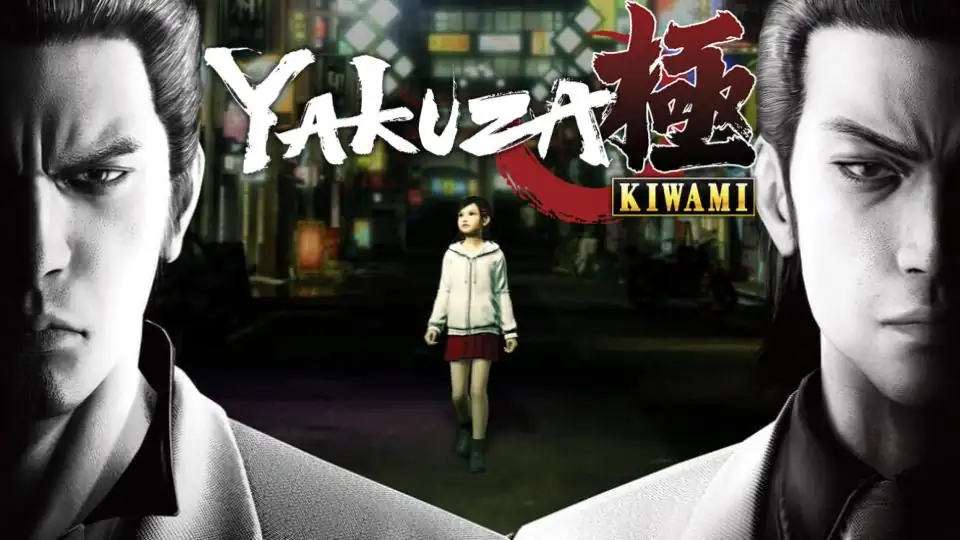
Yakuza (known in Japan as Like a Dragon) is a gritty crime drama game series developed by Ryu Ga Gotoku Studio and published by SEGA. The series began in 2005 with the self-titled Yakuza, and is available on PlayStation, Xbox, and PC platforms. Originally defined by its visceral brawling and cinematic storytelling, the franchise has evolved into a sprawling epic that captures the shifting landscape of Japan's criminal underworld over several decades.
Release Order Complete list of games series in Release Order.
| # | Game Title | Year | Platforms | |
|---|---|---|---|---|
| 1 | Yakuza | 2005 | PS2, PS3, PS4, PC, Wii U | |
| 2 | Yakuza 2 | 2006 | PS2, PS3, PS4, PC, Wii U | |
| 3 | Yakuza 3 | 2009 | PS3, PS4, Xbox One, PC | |
| 4 | Yakuza 4 | 2010 | PS3, PS4, Xbox One, PC | |
| 5 | Yakuza 5 | 2012 | PS3, PS4, Xbox One, PC | |
| 6 | Yakuza 0 | 2015 | PS3, PS4, Xbox One, PC | |
| 7 | Yakuza 6: The Song of Life | 2016 | PS4, Xbox One, PC | |
| 8 | Yakuza: Like a Dragon | 2020 | PC, PS4, PS5, Xbox One, Xbox Series X|S | |
| 9 | Like a Dragon: Infinite Wealth | 2024 | PC, PS4, PS5, Xbox One, Xbox Series X|S |
Chronological Order Complete list of games series in Chronological Order.
| # | Game Title |
|---|---|
| 1 | Yakuza 0 |
| 2 | Yakuza |
| 3 | Yakuza 2 |
| 4 | Yakuza 3 |
| 5 | Yakuza 4 |
| 6 | Yakuza 5 |
| 7 | Yakuza 6: The Song of Life |
| 8 | Yakuza: Like a Dragon |
| 9 | Like a Dragon: Infinite Wealth |
All Yakuza Series Overview Each game's plot guide includes minor spoilers.
1. Yakuza 0 (2015)
In the hyper-inflated economy of 1988 Tokyo, a young and stoic Kazuma Kiryu finds himself cast out of the Dojima Family after being framed for a murder in the "Empty Lot," a tiny patch of real estate central to a massive redevelopment project. Desperate to clear his name and protect his foster father's reputation, he embarks on a harrowing pilgrimage through the shifting alliances of Kamurocho's underworld. He soon realizes that the vacant lot is the linchpin in a bloody power struggle involving three ruthless lieutenants vying for the clan's leadership. Every step he takes draws him deeper into a web of corporate greed and yakuza ritual where his life is the cheapest currency.
Simultaneously, in the vibrant district of Sotenbori, Goro Majima lives in a gilded cage as a disgraced manager of the Grand Cabaret, seeking a way back into the Tojo Clan. His path to redemption is paved with blood when he is offered an ultimatum: assassinate a defenseless girl named Makoto Makimura. Majima's internal conflict reaches a breaking point as he chooses to protect his target rather than execute her, turning his world into a frantic survival struggle against his former handlers. The neon lights of Osaka mask a dark, predatory environment where his loyalty and sanity are tested by the minute.
The fates of Kiryu and Majima begin to converge around the mystery of the Empty Lot and the woman caught in its center. As the billionaire real estate moguls and high-ranking yakuza commanders clash, both men must undergo a transformation that will define their legendary personas for decades to come. The tension mounts as the Dojima Family unleashes its full might to secure the lot, forcing Kiryu into a final, visceral defense of his honor. He stands at the threshold of becoming the "Dragon of Dojima," wondering if the path he has chosen will lead to a kingdom or a grave.
2. Yakuza (2005)
Kazuma Kiryu emerges from a ten-year prison sentence for a crime he didn't commit, only to find the world he once knew in a state of total collapse. The Tojo Clan's legendary ten billion yen has vanished from their vaults, and the Third Chairman has been assassinated, leaving a vacuum of power that threatens to ignite a city-wide war. Amidst this chaos, Kiryu encounters a mysterious young girl named Haruka, who is being hunted by every criminal faction in Kamurocho. He takes her under his wing, realizing that her past is the key to the missing fortune and the rot within the clan.
The conflict intensifies as his childhood friend, Akira Nishikiyama, is revealed to have transformed into a cold-blooded and ambitious patriarch driven by a decade of resentment. The streets become a war zone as rival gangs and political operatives attempt to seize Haruka to claim the billions. Kiryu must navigate a labyrinth of betrayal, where former allies become hunters and the line between family and enemy is blurred by greed. His journey is a desperate attempt to protect the girl's innocence while confronting the ghost of the brother he once loved.
As the truth behind the missing money and the death of his mentor comes to light, Kiryu finds himself trapped in a crossfire atop the Millennium Tower. He realizes that the Tojo Clan's survival hinges on his ability to dismantle the conspiracy that Nishikiyama has helped orchestrate. The relationship between the two former brothers reaches a tragic, explosive peak as the clock ticks down on the ten billion yen. Standing amidst the ruins of his past, Kiryu faces a choice that will either secure Haruka's future or bury them both under the weight of the clan's sins.
3. Yakuza 2 (2006)
One year after the ten-billion-yen incident, Kazuma Kiryu attempts to leave the yakuza life behind to raise Haruka in peace, but fate intervenes when a full-scale war looms between the Kanto-based Tojo Clan and the Kansai-based Omi Alliance. Following a high-profile assassination, Kiryu is pulled back into the fray to negotiate a truce that could prevent a bloodbath in the streets of Tokyo and Osaka. He soon meets his match in Ryuji Goda, the "Dragon of Kansai," a man whose singular ambition is to be the only true dragon in Japan. The clash of these two legendary figures sets the stage for an unprecedented struggle for regional dominance.
The tension spirals as a long-buried conspiracy involving the Jingweon Mafia, a Korean syndicate thought to be destroyed decades ago, begins to resurface. Kiryu finds a reluctant ally in Kaoru Sayama, a detective whose past is mysteriously linked to the Jingweon massacre and Kiryu's own history. Together, they navigate a world of double-crosses and hidden identities, realizing that the Omi-Tojo war is merely a smokescreen for a much older quest for vengeance. The metropolitan landscape is haunted by the scars of the past, as ancient grudges threaten to burn down the modern underworld.
The relationship between the stoic Kiryu and the determined Sayama provides an emotional anchor as they uncover the truth behind the bombs planted across Kamurocho. Ryuji Goda remains a constant, looming threat, his honor bound to a final duel that will leave only one man standing. As the betrayal within the Tojo Clan reaches the highest levels, Kiryu must race to stop a catastrophic explosion that would level the district. The story concludes with a visceral confrontation on a rain-slicked rooftop, where the title of "Dragon" is decided once and for all.
4. Yakuza 3 (2009)
Seeking a quiet life away from the violence of the city, Kazuma Kiryu moves to Okinawa to run the Morning Glory orphanage alongside Haruka. His peaceful existence is shattered when a local land-acquisition plot involving a mysterious American and a double of his deceased mentor, Shintaro Kazama, threatens to displace the children. Kiryu is forced to return to the predatory environment of Kamurocho to uncover a political conspiracy that reaches the highest levels of the Japanese government. The conflict is no longer just about clan territory; it is about protecting the home he has built for his found family.
The stakes rise as two high-ranking Tojo Clan leaders are shot under suspicious circumstances, leaving the organization in a state of leaderless panic. Kiryu realizes that the land deal in Okinawa is tied to a black-market arms ring and a secret intelligence organization known as Black Monday. He must navigate a web of bureaucratic corruption and yakuza infighting, allying with former enemies to expose the men pulling the strings from the shadows. The serene beauty of the Okinawan coast is contrasted sharply with the cold, cynical brutality of the Tokyo power struggle.
The narrative focuses on Kiryu's struggle to bridge his two worlds-the protective father and the legendary fighter. He confronts a mirror image of himself in the CIA operative who bears Kazama's face, forcing him to question the nature of the man who raised him. As the conspirators prepare to finalize the deal that would destroy Morning Glory, Kiryu launches a final assault on the conspirators' stronghold. The suspense builds as he faces a final guardian of the old order, wondering if he can ever truly protect his children from the world he left behind.
5. Yakuza 4 (2010)
The narrative structure of the series expands as the perspective shifts between four distinct protagonists: the legendary Kazuma Kiryu, the charismatic loan shark Shun Akiyama, the escaped convict Taiga Saejima, and the rookie detective Masayoshi Tanimura. Their disparate lives begin to intertwine following a seemingly minor shooting in Kamurocho that leaves a member of the Ueno Seiwa Clan dead. A massive sum of 100 million yen vanishes, triggering a hunt that unearths a 25-year-old conspiracy involving a bloody hit that shaped the Tojo Clan's history. Each man holds a piece of a puzzle that threatens to dismantle the current power structure of the city.
Tension escalates as Saejima's past is scrutinized, revealing the truth behind the 1985 "Ueno Seiwa Massacre" and his role in the clan's rise. Tanimura's search for his father's killer leads him into the dark heart of police corruption, while Akiyama's financial empire becomes a target for those seeking the missing money. Kiryu is eventually drawn back from his Okinawan retreat, realizing that his legacy is inextricably linked to the men currently fighting in the streets. The metropolitan underworld becomes a pressure cooker of conflicting motives, where trust is a rare and dangerous commodity.
The thematic focus centers on the shared burden of the past and the necessity of cooperative action. The four heroes must overcome their mutual suspicions to confront a rogue faction of the Tojo Clan and high-ranking officials who have orchestrated the decades-long cover-up. The narrative moves toward a synchronized assault on the Millennium Tower, where each man must face a different architect of the conspiracy. The suspense reaches a peak as the truth of the Ueno Seiwa incident is finally laid bare. They stand together against the full might of the corrupted elite, wondering if their combined strength can finally break the cycle of betrayal.
6. Yakuza 5 (2012)
The struggle for power stretches across five major Japanese cities as the fragile peace between the Tojo Clan and the Omi Alliance begins to fracture once more. Kazuma Kiryu is living under an assumed identity as a humble taxi driver in Fukuoka, attempting to sever his ties to Haruka so she can pursue her dream of becoming a pop idol. However, the sudden disappearance of the Tojo Chairman forces him back into action, just as four other individuals-Saejima, Akiyama, a disgraced baseball player named Shinada, and Haruka herself-find their lives disrupted by a vast criminal conspiracy.
The conflict becomes a multifaceted epic, shifting from the snowy streets of Sapporo to the neon districts of Nagoya and Osaka. Saejima escapes prison once more to find the truth behind his brother's actions, while Haruka's idol career is threatened by the dark underbelly of the entertainment industry. They soon realize that an unseen mastermind is manipulating both major clans into a final, apocalyptic war to reshape the underworld in their image. The personal dreams of the protagonists are pitted against the cold, mechanical requirements of yakuza politics, leading to a sense of pervasive exhaustion.
The thematic focus is on the burden of "dreams" and the sacrifices required to achieve them. Kiryu must decide if he can remain in the shadows while his former family burns, while Haruka faces a moral crossroads that could destroy her reputation. The narrative builds toward a massive, coordinated confrontation in Tokyo, where the paths of all five characters converge. The suspense peaks as the true heir to the conspiracy is revealed during a high-stakes concert. Kiryu enters his final, blood-soaked battle in the snow, wondering if he has finally sacrificed too much for a world that refuses to let him go.
7. Yakuza 6: The Song of Life (2016)
After serving a three-year prison sentence to atone for his past, Kazuma Kiryu returns to Kamurocho only to find that Haruka has vanished. His search leads to a hospital where she lies in a coma following a mysterious hit-and-run, and more shockingly, he discovers she has a secret infant son named Haruto. Determined to find the father and protect his grandson, Kiryu travels to the sleepy, seaside town of Onomichi in Hiroshima. He enters a world of fading shipyards and old-fashioned gangsters, far removed from the high-tech corporate crime of Tokyo, yet hiding a secret that could shake the foundations of Japan.
The conflict intensifies as Kiryu realizes that the Saio Triad, the Yomei Alliance, and the Tojo Clan are all hunting for Haruto for reasons beyond simple kidnapping. He befriends the Hirose Family, a small-time yakuza group that operates with an archaic sense of honor, and begins to piece together the "Secret of Onomichi." The mystery involves a decades-long government cover-up that has kept a massive piece of military hardware hidden beneath the waves. Kiryu's role as a grandfather provides a tender contrast to the visceral violence he must inflict on those who threaten the boy's life.
The narrative serves as the final chapter of the Kiryu saga, focusing on the legacy of a man who has become a legend he never wanted. He must confront the realization that his presence in Haruka's life is a magnet for danger, leading to a heart-wrenching decision regarding his own future. The suspense builds toward a final showdown at a massive shipyard, where the truth of Onomichi is finally brought to light. Kiryu prepares for a final, selfless act to secure a world where Haruka and Haruto can live without the shadow of his name. He faces his end with a stoic grace, leaving his legacy in the hands of the next generation.
8. Yakuza: Like a Dragon (2020)
A new hero emerges in the form of Ichiban Kasuga, a low-level grunt for the Arakawa Family who willingly takes the fall for a crime he didn't commit to repay a debt of honor. After serving eighteen years in prison, he expects a hero's welcome but is instead met with a bullet to the chest from his beloved patriarch. Dumped in a trash heap in the city of Isezaki Ijincho, Yokohama, Ichiban must rebuild his life from the absolute bottom. Armed only with his unshakable optimism and a vivid imagination inspired by his favorite RPGs, he gathers a ragtag group of outcasts-an ex-cop, a homeless nurse, and a hostess-to find out why his boss betrayed him.
The conflict escalates as Ichiban's group uncovers the "Great Dissolution," a plot that has fundamentally altered the power balance between the Tojo Clan and the Omi Alliance. They realize that Ijincho is governed by a fragile "Great Wall of Muscle" consisting of three rival factions: the Seiryu Clan, the Liumang, and the Geomijul. Ichiban's quest for answers leads him into a deep political conspiracy involving the "Bleach Japan" movement and the highest levels of the national government. His journey is a reimagining of the hero's quest, where the power of friendship is a literal weapon against the cold pragmatism of the modern yakuza.
The thematic focus centers on resilience and the idea that anyone can be a hero, regardless of their social standing. Ichiban's relationship with his patriarch, Masumi Arakawa, remains the driving force of the narrative, leading to a heartbreaking revelation about the man he admired. The suspense builds as the group prepares to dismantle the alliance between the Omi and a corrupt politician. Ichiban faces a final confrontation where his convictions are tested against the cynical reality of the world he was born into. He stands amidst the ruins of his old life, ready to forge a new path for himself and his friends.
9. Like a Dragon: Infinite Wealth (2024)
Ichiban Kasuga's quest for redemption takes a global turn when he travels to Honolulu, Hawaii, after receiving a tip that his long-lost mother is still alive and in hiding. His arrival is met with immediate betrayal as he is robbed and left naked on a public beach, forcing him to navigate a foreign land where he doesn't speak the language. He soon crosses paths with a weary and ailing Kazuma Kiryu, who is in Hawaii on a secret mission for the Daidoji Faction. The two dragons-one rising and one fading-must team up to protect a young girl named Lani and uncover a global conspiracy involving a religious cult and the disposal of nuclear waste.
The conflict deepens as they realize that the island is a battleground for several powerful factions, including the Barracudas and the Ganzhe, who are all hunting for Ichiban's mother. Kiryu reveals his battle with cancer, adding a layer of tragic urgency to their mission as he attempts to complete his final tasks while guiding Ichiban. The narrative explores the contrast between the sunny, tourist facade of Hawaii and the dark, predatory underworld operating beneath the surface. Ichiban's unwavering spirit acts as a catalyst for Kiryu's own search for peace, leading to a profound meditation on the meaning of a legacy.
The relationship between Ichiban and Kiryu serves as the ultimate bridge between the series' past and future. They must coordinate a two-pronged assault across Hawaii and Japan to stop the cult leader Bryce Fairchild and the ambitious Ryo Aoki's successor. The theme of "infinite wealth" refers not to money, but to the bonds of friendship and family that both men have accumulated over their lives. The suspense builds toward a final battle on a remote island facility, where the fate of the next generation of yakuza is decided. Ichiban stands at the center of the storm, realizing that his journey is only just beginning.
All Yakuza Games in Order: A comprehensive list of the franchise, organized by release and chronological order. Information is curated from web sources and highlights mainline entries only. Note: This guide does not include DLCs or remakes, focusing strictly on primary Yakuza titles for a cleaner browsing experience.