Series Overview
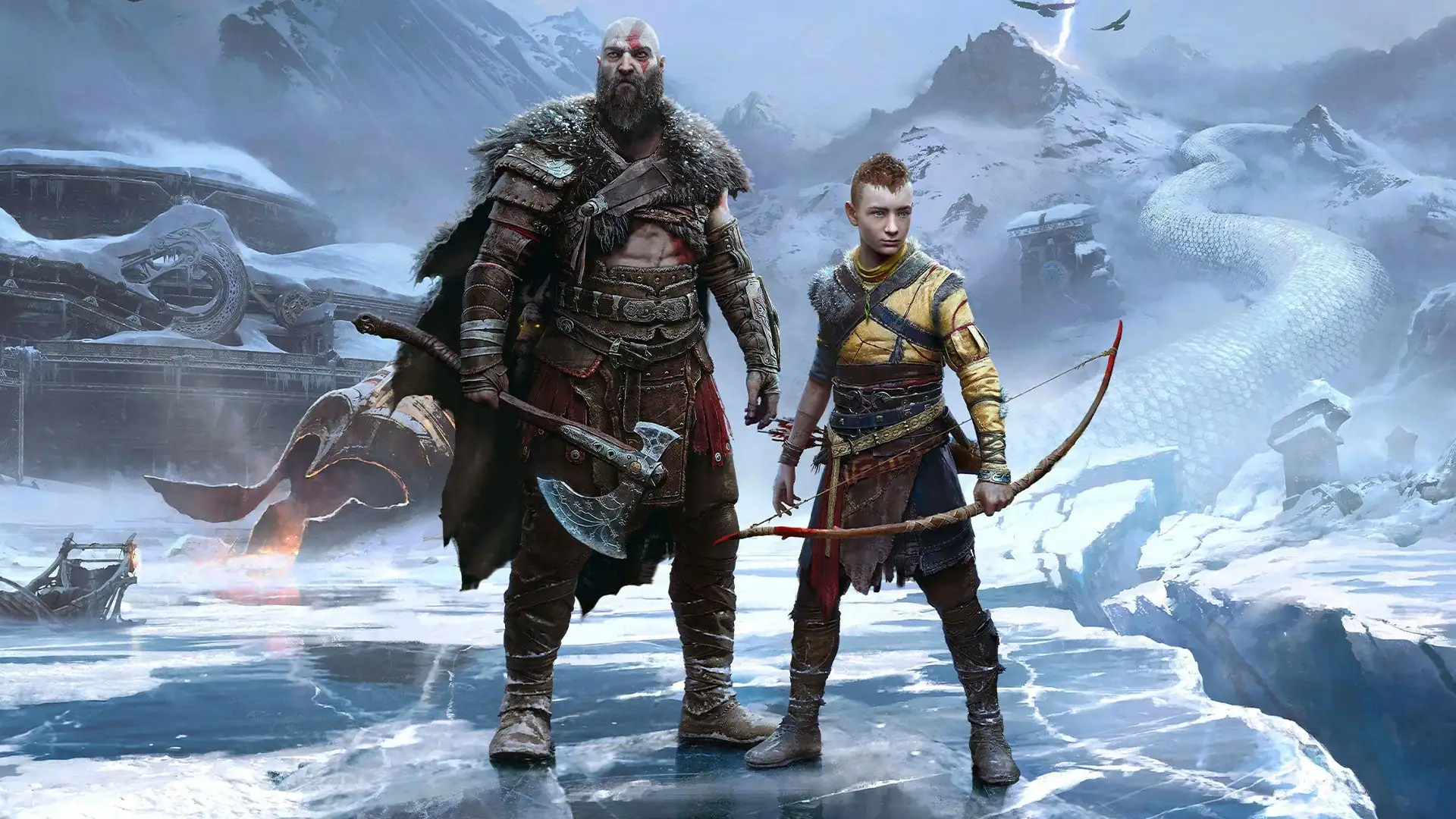
God of War is a titan of the action-adventure genre, developed primarily by Santa Monica Studio and published by Sony Interactive Entertainment. The series began in 2005 with the groundbreaking God of War on the PlayStation 2 and has since expanded across every subsequent PlayStation generation. It stands as a masterclass in scale, moving from the blood-slicked marble of ancient Greece to the frozen, mythic landscapes of the Norse realms, constantly pushing the boundaries of cinematic combat and environmental storytelling.
Release Order Complete list of games series in Release Order.
| # | Game Title | Year | Platforms | |
|---|---|---|---|---|
| 1 | God of War | 2005 | PS2, PS3 | |
| 2 | God of War II | 2007 | PS2, PS3 | |
| 3 | God of War: Chains of Olympus | 2008 | PSP, PS3 | |
| 4 | God of War III | 2010 | PS3, PS4 | |
| 5 | God of War: Ghost of Sparta | 2010 | PSP, PS3 | |
| 6 | God of War: Ascension | 2013 | PS3 | |
| 7 | God of War (2018) | 2018 | PC, PS4 | |
| 8 | God of War Ragnarök | 2022 | PC, PS4, PS5 |
Chronological Order Complete list of games series in Chronological Order.
| # | Game Title |
|---|---|
| 1 | God of War: Ascension |
| 2 | God of War: Chains of Olympus |
| 3 | God of War |
| 4 | God of War: Ghost of Sparta |
| 5 | God of War II |
| 6 | God of War III |
| 7 | God of War (2018) |
| 8 | God of War Ragnarök |
All God of War Series Overview Each game's plot guide includes minor spoilers.
1. God of War: Ascension (2013)
Six months after the tragic death of his wife and child by his own hand, Kratos is a man shattered by grief and bound by a blood oath to the God of War, Ares. His refusal to honor the contract leads to his imprisonment by the Furies, ancient jailers of the damned who specialize in psychological torture. Kratos must fight through the viscera of the Hecatonchires, a giant multi-armed titan turned into a living prison, to reclaim his freedom and his sanity. The world around him is a shifting fever dream of guilt and physical agony.
The conflict escalates as Kratos discovers that the Furies are conspiring with Ares to overthrow Olympus, using the Spartan as their primary weapon. He is aided by Orkos, the son of the Furies, who seeks to atone for his family's cruelty by helping Kratos break his bond. Their journey takes them through the Oracle of Delphi and the icy peaks of the Lantern of Delos, uncovering the manipulation that led to Kratos's fall. The Spartan's rage is not yet a controlled weapon but a raw, bleeding wound that the Furies take every opportunity to salt.
The core tension rests on the internal battle for Kratos's mind, as the Furies use illusions of his dead family to keep him compliant. His burgeoning relationship with Orkos provides a rare glimpse of empathy in a life defined by slaughter. As the conspiracy to unseat Zeus comes to a head, Kratos realizes that breaking his oath will require a sacrifice that leaves him truly alone. The suspense peaks as he stands over the broken bodies of his jailers, realizing that even with his chains shattered, the nightmares are only beginning.
2. God of War: Chains of Olympus (2008)
During his ten years of service to the gods of Olympus, Kratos is dispatched to the city of Attica to defend it from the invading Persian army. The sky suddenly turns black as Morpheus, the God of Dreams, plunges the world into an eternal slumber after the Sun God Helios is plucked from the sky. Kratos is tasked with finding the missing deity to prevent the world from being consumed by shadows. His journey takes him into the depths of the Underworld, where the boundaries between the living and the dead have begun to blur.
The mission takes a devastatingly personal turn when Kratos encounters the spirit of his daughter, Calliope, in the Fields of Elysium. He discovers that the Titan Atlas and the goddess Persephone are behind the conspiracy to destroy the Pillar of the World, which would collapse Olympus and end all existence. Kratos is forced into an agonizing dilemma: stay with his daughter in the paradise of the afterlife or reclaim his weapons to save a world that has given him nothing but pain. The silence of the slumbering world amplifies the sound of his own breaking heart.
The thematic focus is on the cruelty of hope and the selflessness required of a monster. Kratos must make the brutal choice to push his daughter away to regain the strength needed to stop Persephone's nihilistic plan. The relationship between the father and the ghost of his child serves as the emotional anchor for a journey through the most desolate corners of Greek myth. As he prepares to battle the goddess atop the crumbling world-pillar, the suspense rests on the price of his victory. He saves the world, only to wake up on a cliffside, more a slave to the gods than ever before.
3. God of War (2005)
Kratos, the "Ghost of Sparta," is a man pushed to the brink of madness, haunted by the memories of his past atrocities and tired of being a pawn for the gods. Athena offers him a final chance at redemption: find Pandora's Box and use its power to kill Ares, the God of War who is currently laying waste to Athens. Kratos embarks on a journey through the war-torn city and into the scorching Desert of Lost Souls, seeking the massive Titan Cronos, who carries the temple of the box upon his back.
The struggle is a visceral climb through the most lethal traps and monsters ancient Greece has to offer. Kratos's hatred for Ares is a burning fire fueled by the revelation of how the god orchestrated the slaughter of his own family to create the "perfect warrior." He navigates the labyrinthine halls of Pandora's Temple, overcoming trials of strength and sacrifice that would break any mortal. The narrative emphasizes the transformation of a man into a force of nature, driven by a singular, blinding need for vengeance.
The core tension is the psychological weight of the "visions" that plague Kratos, which the gods promise to take away upon his success. He realizes that Ares is not just a target, but the source of the rot in his own soul. As Kratos finally opens the box and grows to a titanic size to face his former master, the fate of Athens hangs in the balance. The suspense peaks in the final duel on the shores of the Aegean, where the Spartan must confront his past to claim his future. He wins his war, but finds that the gods promises of peace are as hollow as the box he opened.
4. God of War: Ghost of Sparta (2010)
Despite becoming the new God of War, Kratos is still haunted by visions of his mortal past-specifically of his mother, Callisto, and his long-lost brother, Deimos. He defies Athena's warnings and journeys to the city of Atlantis to find the truth of his lineage. There, he discovers that his brother was kidnapped by the gods as a child due to a prophecy about a "marked warrior" who would destroy Olympus. Kratos's search leads him through the submerged ruins of the city and into the Domain of Death itself.
The conflict escalates as Kratos finds his mother, who is transformed into a hideous beast by a divine curse, forcing him to kill the only person who truly loved him. His rage turns toward Thanatos, the God of Death, who has been torturing Deimos for decades in a realm outside the gods' control. When Kratos finally finds his brother, he is met not with a joyful reunion, but with a sibling whose mind has been broken by abandonment and hatred. The brothers reunion is a collision of two lives destroyed by the whims of the Olympians.
The thematic focus is on the inevitability of the prophecy and the tragic irony of the gods' intervention. By trying to prevent their downfall, the gods created the very monster that would ensure it. Kratos and Deimos must find a way to reconcile their shared trauma in the heat of a battle against death itself. The suspense builds as they enter the final arena, a jagged landscape of bones and shadow. The narrative ends with Kratos standing over a fresh grave, his transformation into the destroyer of Olympus now complete and his hatred for the gods absolute.
5. God of War II (2007)
Betrayed by Zeus and stripped of his godhood, Kratos is murdered and cast into the pits of Hades. However, he is rescued by the Titan Gaia, who offers him a chance to change his fate and exact revenge on the King of the Gods. Kratos must find the Sisters of Fate, the only beings with the power to travel back in time to the moment of his betrayal. His journey takes him to the Island of Creation, a sprawling landscape of ancient temples, massive steeds, and the decaying ruins of those who tried to challenge destiny before him.
The struggle is an epic march against the very fabric of time, as Kratos battles through legendary figures like Icarus and Theseus to reach his goal. He learns that the Titans, who were defeated by Zeus in the Great War, are using him as a pawn in their own bid for power. Kratos's singular focus on killing Zeus blinds him to the manipulation of Gaia, turning him into a blunt instrument of total destruction. The environment itself is a puzzle designed by the Sisters to weed out the unworthy, testing Kratos's resolve with every step.
The core tension revolves around the concept of free will versus predestination. Kratos refuses to be a "thread" in the Sisters' loom, determined to rip the tapestry of time apart to satisfy his rage. His journey highlights the immense cost of his vengeance, as he leaves a trail of dead heroes and shattered landscapes in his wake. The suspense reaches a fever pitch as he finally confronts the Sisters in their inner sanctum. He emerges with the power to rewrite history, returning to the moment of his death to launch an all-out assault on Olympus.
6. God of War III (2010)
The end of the Greek world begins as Kratos leads the Titans in a massive assault on Mount Olympus. The war is a chaotic symphony of destruction, with Kratos systematically hunting down and executing the gods, causing the world to fall into elemental ruin. With Poseidon's death, the oceans rise; with Helios's fall, the sun is extinguished. Kratos is a man possessed, ignoring the pleas of the Titans and the suffering of the mortals to reach Zeus, the father who abandoned him.
The conflict takes a surreal turn as Kratos is once again cast into the Underworld, where he meets the spirit of Pandora. She is revealed to be the "key" to reopening the box and regaining the power to kill a god. Kratos's relationship with the girl begins to soften his hardened exterior, reminding him of the daughter he lost and the humanity he discarded. He must protect her from the gods and the Titans alike, realizing that everyone in this war is simply using her as a tool. The climb back to the summit is a journey through a dying world that Kratos himself is unmaking.
The thematic focus is on the consequences of unchecked rage and the search for hope in the ruins. Kratos finally realizes that the true power he sought was not in the box, but within himself all along-a power that Zeus and the gods tried to suppress. The final confrontation with Zeus is a brutal, visceral struggle that moves from the physical realm into the psychic landscape of Kratos's own mind. The suspense lingers on the final blow, as Kratos realizes that his vengeance has left him with a world of nothing. The story concludes with a final, selfless act that leaves the future of the world in the hands of the survivors.
7. God of War (2018)
Years after the destruction of Olympus, a weary Kratos lives a quiet, secluded life in the realm of Midgard with his young son, Atreus. Following the death of his wife, Faye, Kratos must fulfill her final wish: to spread her ashes from the highest peak in all the realms. Their journey is interrupted by a mysterious, indestructible stranger who possesses god-like strength and knows Kratos's true identity. Father and son must navigate a world of Norse myth, learning to trust one another while Kratos struggles to hide the monster he once was from the boy he is trying to raise.
The conflict centers on the friction between a father who fears his own nature and a son who is discovering his own divine potential. They must travel through the shifting Lake of Nine and into the elven realm of Alfheim, all while being hunted by the sons of Thor. Kratos's stoic silence clashes with Atreus's curiosity and growing arrogance, creating a tension that is as dangerous as the trolls and draugr they face. The revelation of Atreus's true heritage adds a layer of existential dread, as Kratos realizes he cannot protect his son from the gods forever.
The relationship between Kratos and Atreus is the narrative's heart, a journey of mutual growth and hard-won respect. Kratos must learn to be a father instead of a general, while Atreus must learn the discipline required of a god. The theme of "being better" than those who came before is central, as Kratos attempts to break the cycle of deicide and betrayal. The suspense builds as they finally reach the peak of Jötunheim, where they uncover a prophecy that suggests their journey was orchestrated long ago. They stand amidst the ashes, realizing that their actions have ignited the first sparks of Ragnarök.
8. God of War Ragnarök (2022)
Fimbulwinter has gripped Midgard, a sign that the end of the Norse world is approaching. Atreus, now a teenager, is obsessed with his identity as "Loki" and the role he is meant to play in the coming war. Kratos, wanting only to keep his son safe, finds himself drawn into a global conflict between the Aesir gods-led by a calculating Odin and a grieving Thor-and the resistance forces seeking to stop them. They must travel across all Nine Realms, seeking allies and answers to a prophecy that predicts Kratos's ultimate death.
The tension escalates as the bond between father and son is tested by secrets and conflicting desires. Atreus's search for Tyr, the Norse God of War, leads them into a web of Odin's deceptions, where the All-Father uses words and manipulation rather than brute force. Kratos must confront the ghosts of his past-specifically the vengeful Freya, who blames him for the death of her son-while trying to convince Atreus that they can forge their own fate. The scale of the conflict grows as the giants, dwarves, and elves are pulled into the final battle for existence.
The thematic focus is on the weight of prophecy and the courage required to change. Kratos must decide if he will return to the role of the destroyer to save his son or if he can truly become a god of justice and hope. The relationship with Atreus reaches a crossroads where the boy must step out of his father's shadow to find his own path. The suspense peaks during the final assault on Asgard, a multi-realm war that threatens to consume everyone they love. The story concludes with a quiet, powerful moment of realization, leaving Kratos to look toward a future where he is defined not by his rage, but by the lives he has protected.
All God of War Games in Order: A comprehensive list of the franchise, organized by release and chronological order. Information is curated from web sources and highlights mainline entries only. Note: This guide does not include DLCs or remakes, focusing strictly on primary God of War titles for a cleaner browsing experience.